Reading the Weather: How Temperature, Humidity and Dew Point Shape Exterior Paint
Once exterior paint is on the wall, it looks like a finished job. But the hours and days after application decide whether the coating lasts for many years or starts failing after its first winter. Interior work happens in a controlled space; exterior work does not. Air temperature, surface temperature, humidity, dew point, wind and direct sun all affect how paint dries, bonds and cures. That is why experienced painters watch the forecast as closely as they watch the brush.
How Paint Turns Into a Film
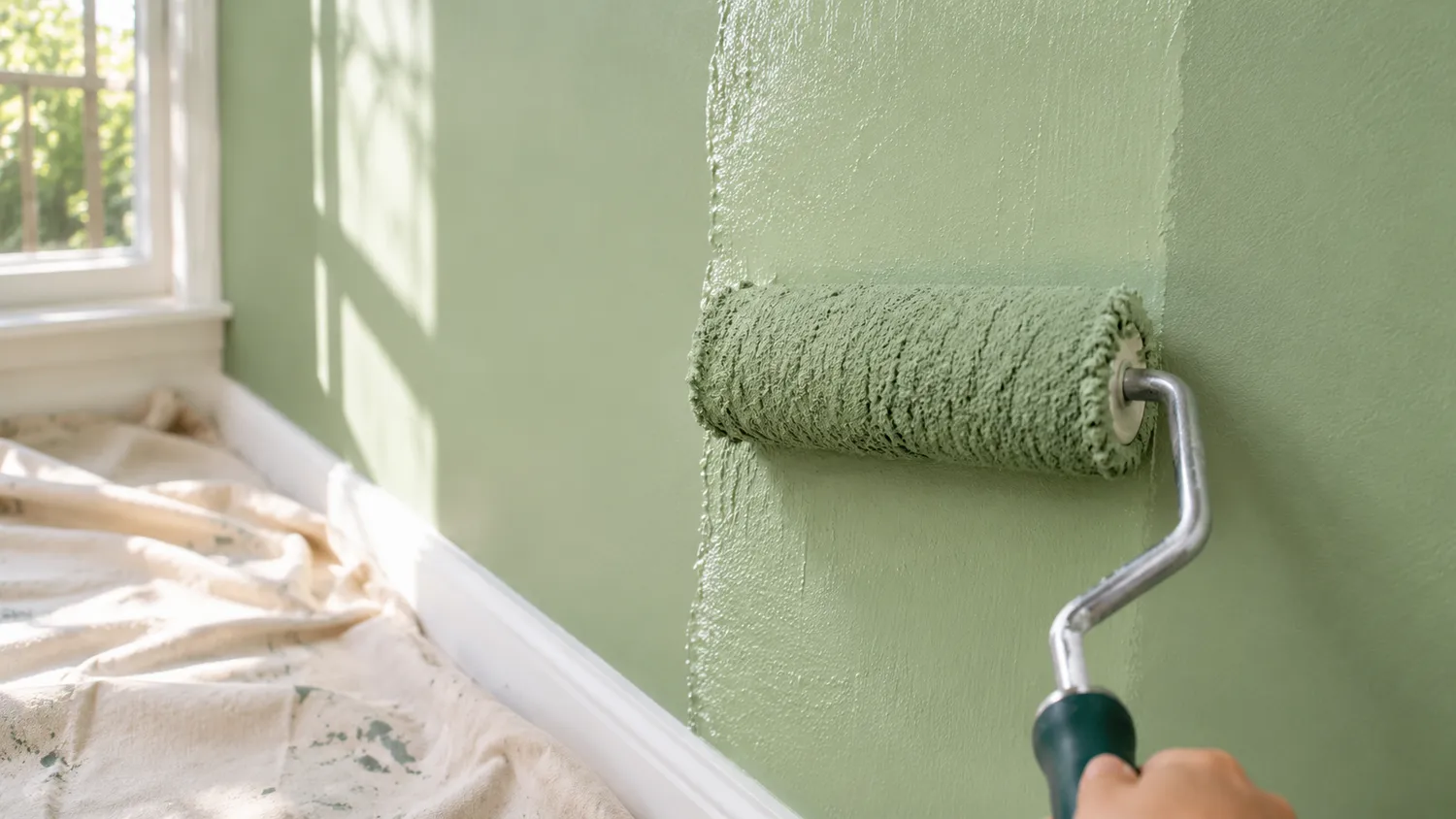
Most modern exterior house paints are waterborne acrylic latex. In the can, tiny polymer particles are suspended in water. After application the water evaporates, the particles crowd together and then fuse into a continuous film. This fusion is called coalescence, and it depends on temperature.
Every formula has a minimum temperature below which the particles do not merge properly. The paint may look fine at first, but the film can be weak, porous or poorly attached. Cracking and early peeling often follow. For this reason, every can lists a minimum application temperature. Standard formulas commonly call for 50°F or higher, and some products are designed for cooler conditions, down to about 35°F. The label is the rule. It usually applies to both the air and the surface for the whole drying period, not only the moment the paint goes on.
Surface Temperature Is Not Air Temperature
A thermometer on a porch tells only part of the story. Siding on the north side of a house can stay noticeably colder than the air for much of the day. A dark, west-facing wall on a sunny afternoon can become far hotter than the surrounding air. Painters often use infrared thermometers to check the actual surface before opening a can.
Homeowners searching for painters near me Lake Zurich in early spring sometimes notice that exterior work starts later in the morning than expected. The delay usually has a practical reason: walls need time to warm up, and overnight moisture needs time to evaporate.
Humidity, Dew Point and the Evening Problem
Dew point is the temperature at which moisture in the air condenses into water on surfaces. A widely used guideline in the coatings industry is to keep the surface at least 5°F above the dew point during application and early drying. When walls cool in the evening and reach the dew point, condensation forms on fresh paint.
On latex paint, that moisture can cause surfactant leaching. Water-soluble ingredients migrate to the surface and leave sticky, tan or brownish streaks, especially on darker colors. The streaks usually wash off once the paint has cured, but they show that the coating met moisture too soon. High humidity also slows drying in general. That leaves a longer window in which dust, insects or a sudden shower can mark the finish. In late season, exterior work is therefore often wrapped up by mid-afternoon, so the film has several hours to set before dew arrives.
When Sun and Wind Work Against the Paint
Heat creates its own problems. In strong direct sunlight, paint can dry so quickly that one section sets before the next is blended in, which leaves lap marks. A fast-forming skin can also trap moisture or solvent underneath. That may lead to blistering, particularly on dark colors that absorb more heat. A common practice is to “follow the shade”: each side of the house is painted after the sun has moved off it.
Wind speeds up drying even more and carries dust, pollen and debris onto wet paint. On more open properties, where people looking for painters near me Round Lake may be dealing with exposed lots and steady breezes, wind can matter as much as temperature when choosing a work day. It also affects spraying, because overspray drifts farther in gusty conditions.
Overnight Lows and the Curing Period
Dry to the touch is not the same as cured. A coat may feel dry within an hour, but it keeps hardening for days or weeks. Many labels require temperatures to stay above the minimum through the following night as well. A warm afternoon followed by a near-freezing night can undo careful work.
In northern Illinois, this makes the shoulder seasons tricky. Late spring and early fall often offer the most comfortable painting conditions, yet nights can turn cold quickly. Residents comparing options under painters near me Barrington in September and October may hear the forecast discussed in terms of overnight lows rather than daytime highs. The cold hours after sunset are what threaten a fresh coat.
Moisture in the Substrate
Weather affects the materials being painted, not only the air around them. Wood siding and trim absorb water after rain. Painting over damp wood traps moisture, and when that moisture later tries to escape, it pushes the paint off from behind. A moisture meter gives an objective reading, and painters usually wait after rain before coating wood. Masonry and stucco hold moisture even longer. Anyone browsing painters near me Libertyville after a rainy stretch may find that exterior schedules shift for exactly this reason.
Bringing It Together
Exterior paint performance depends on conditions that change hour by hour. Air and surface temperature, dew point, humidity, sun, wind and substrate moisture all interact, and the label on each product sets its limits. Paying attention to these factors is not caution for its own sake. It is what lets a coating form the durable, well-bonded film it was designed to be.