Look at the edge of almost any glass shelf, tabletop or shower panel and you will notice something odd. The face of the glass looks perfectly clear, but the edge glows a distinct shade of green. It is not a coating or a reflection. The color is built into the glass itself, and the reason goes all the way back to the sand it was made from.
Glass starts as sand
Most everyday glass, called soda-lime glass, is made from three main ingredients: silica sand, soda ash and limestone. The mixture is melted at around 2,700°F until it becomes a thick, glowing liquid.
The Great Lakes region knows a thing or two about sand. The Indiana Dunes, a short drive north of Valparaiso, are made of fine quartz sand that was once shipped to glassmakers across the Midwest. If you are looking up glass shower doors near me Valparaiso, there is a nice bit of local history in the material itself.
The catch is that natural sand is never pure. It almost always contains tiny traces of iron.
Iron is the green culprit
In ordinary glass, iron makes up only about a tenth of one percent of the material. That sounds like nothing, but iron oxide is a powerful colorant. Some of it absorbs light at the red end of the spectrum. Take red away from white light, and what remains leans toward blue-green.
On a thin window, you barely notice. Light passes through only a few millimeters of glass, so very little is absorbed. But look at the edge of the same panel, and light is traveling through the full width of the sheet, often several feet. All that extra glass adds up, and the green becomes obvious.
Try this: next time you see a stack of glass panes, look at it from the side. The stack looks deep green, almost like a bottle. Each sheet adds a little more color.
Why it matters in a shower
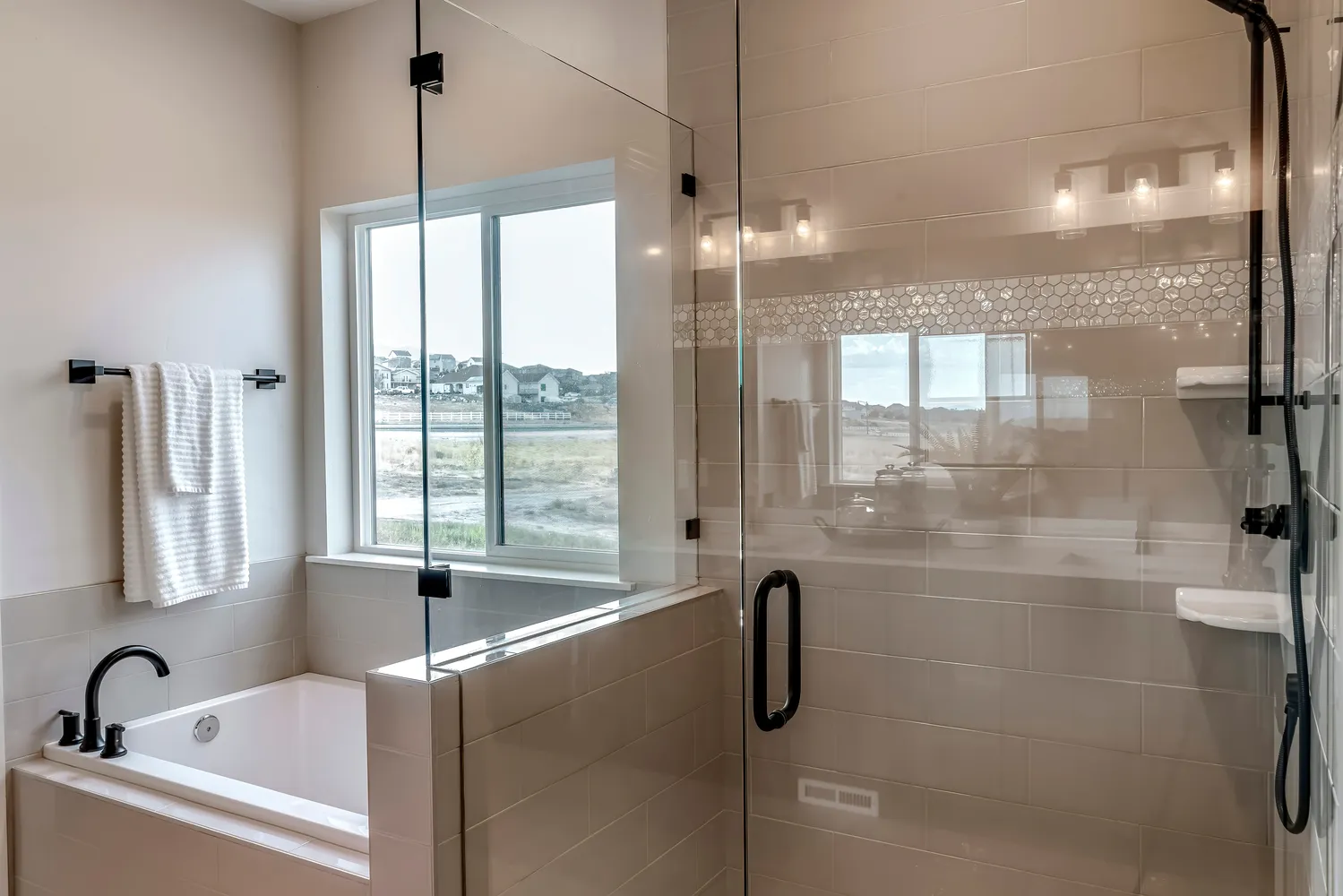
Shower glass is thick, usually 3/8″ or 1/2″. That is two to four times thicker than a typical window, so the green tint is stronger. You may notice:
- A faint green cast when looking through the glass at white tile.
- Distinctly green polished edges on frameless panels.
- Slightly less vivid colors behind the glass, especially whites, creams and light marble.
For homeowners researching glass shower doors near me Madison, this is worth knowing before choosing tile. A crisp white or light gray bathroom will show the tint more than a warm or dark one.
The fix: low-iron glass
Glassmakers solved this by starting with specially selected raw materials that contain far less iron, often around a tenth as much as standard glass. The result is known as low-iron or ultra-clear glass. You may also see brand names such as Starphire.
Low-iron glass lets through slightly more light and shows colors much more truthfully. Its edges look nearly colorless, with only a faint blue-white glow. It is the same type of glass used in museum display cases, high-end aquariums and solar panels, where every bit of clarity counts.
How flat glass is made today
The glass in modern shower doors is almost always float glass. The process was developed in the 1950s by British engineer Alastair Pilkington. Molten glass is poured onto a long bath of molten tin, where it spreads out and floats. Gravity and surface tension make both faces perfectly flat and smooth, with no grinding or polishing needed.
The float process made large, flawless sheets affordable, which is one reason frameless showers became possible. Anyone comparing glass shower doors near me Milwaukee is looking at glass that started life floating on a river of liquid metal.
A few more glass color facts
- Old window glass can turn purple. Some glass made in the late 1800s and early 1900s contained manganese, added to cancel out the green. After decades of sunlight, the manganese oxidizes and turns the glass a soft lavender.
- Bottle makers add iron on purpose. Green and amber bottles use extra iron and other elements to protect drinks from light.
- Tinted shower glass is a choice. Bronze and gray glass get their color from added metal oxides, used deliberately to create a warm or smoky look.
The takeaway
No glass is truly colorless. What we call clear is really a very pale green, tinted by a trace of iron left over from ancient sand. For most windows, nobody notices. For a thick shower panel in front of white marble, it can make a visible difference. Now that you know where to look, you will start spotting that green edge everywhere.